

January 2025
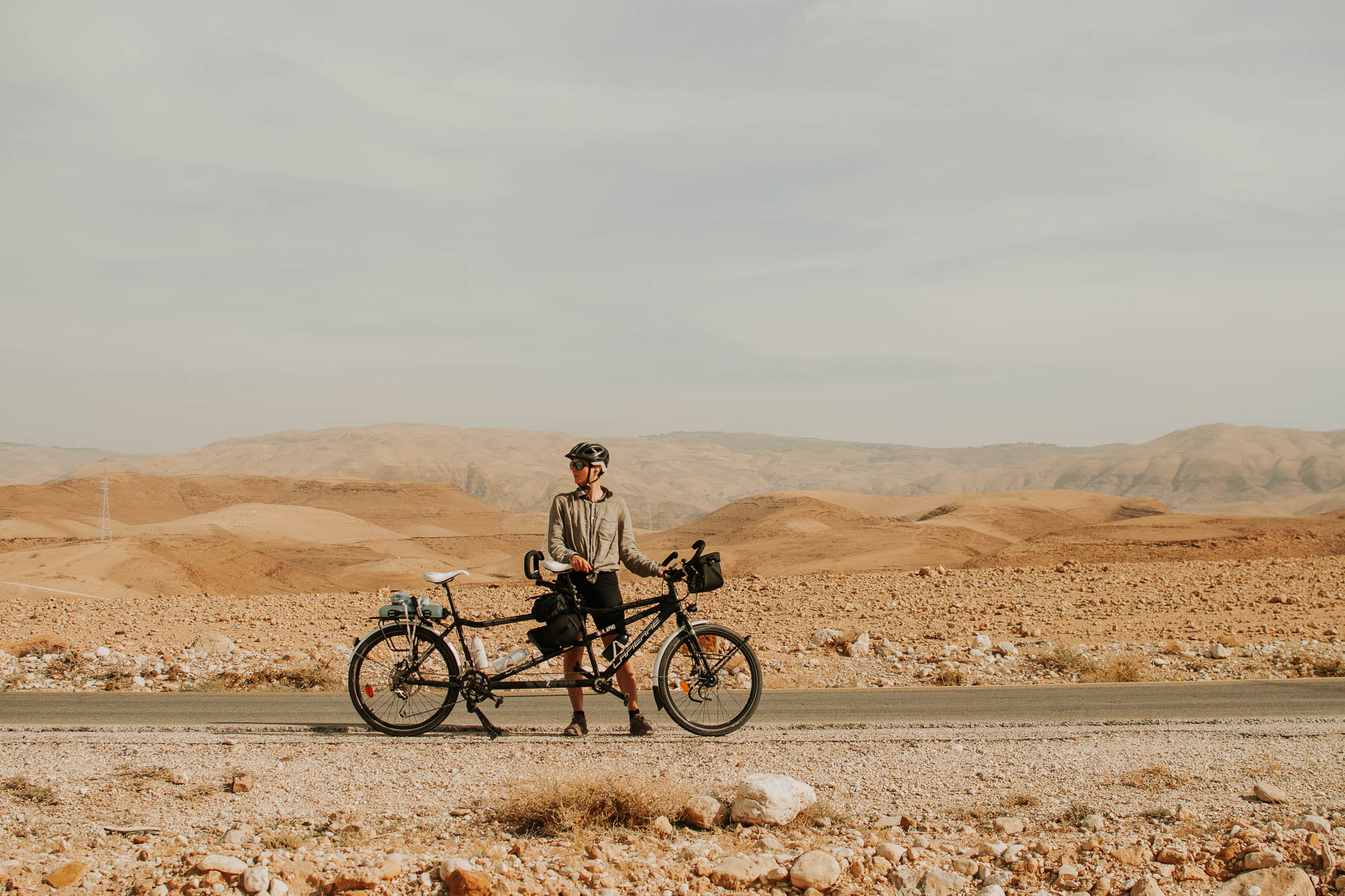
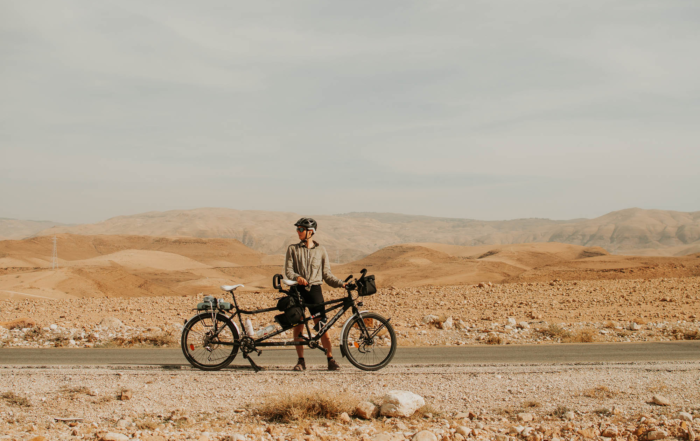
Every decent traveler must have a travel project that has taken years to mature, to be planned, and to be brought to life. Ours would definitely be Jordan by bicycle — a trip that was born in our minds eight-ish years ago, had its first attempt in March 2020, and I think this date is sufficient for you to guess what happened next. But if not, there is a funny article about our week in Amman, while we were watching the pandemic unfold before getting evacuated back to France. A so-so adventure that postponed this trip for another five years. BUT WE ARE PERSISTENT. So, on the 1st of January 2025, our tired bums, together with enormous bags of various cycling stuff, were flying to Amman for what would be two and a half months of cycling across Jordan and Saudi Arabia (also referred to as KSA). Luckily, the bags under our eyes didn’t count as separate luggage.
As you can imagine, it is extremely — impossibly — difficult to relate such an adventure in its fullness, with all its ups and downs and, not least, while avoiding cheesy pseudo-philosophical banalities. Moreover, this whole journey was so complex and emotionally complicated that it took me a year (!!) to open a Google Doc and start typing the first words.
As this is still an online travel blog and reader-friendliness and structure still have their word to say, I’ll divide this experience into several posts:
- Jordan by Bicycle: Everything You Need to Know
- Cycling adventure in Saudi Arabia: itinerary & technicalities, FAQ
- Our favorite places in Jordan (working title)
- Our favorite places in Saudi Arabia (working title)
- Maybe something else, we’ll see (not a title)
❗ An important disclaimer: this is the report of our trip only and, at most, the feedback of our fellow travelers. This is not universal truth, official statistics, or whatnot. Your mileage may vary.
Let’s go!

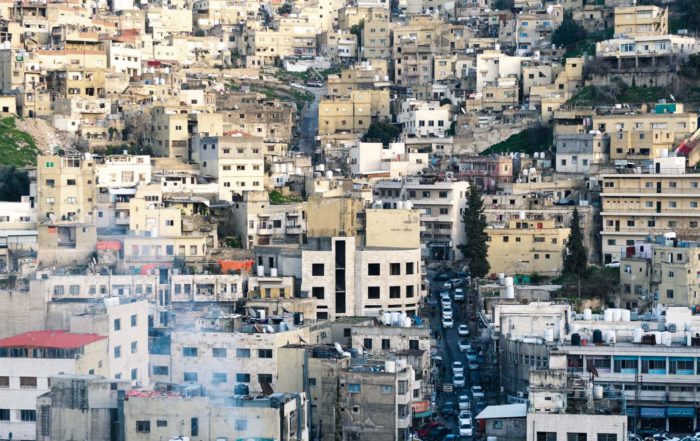
Between Amman and Jerash
Some Numbers


Why Jordan?
This is almost always among the first questions people ask. And I would really love to give a definite answer, but over so many years the original motive got blurred. I think it could be summed up along these lines: we had cycled in Denmark, Iceland, and England and thought it would be nice, for a change, to go to a radically different climate. Somehow Jordan came up. We liked the idea. Then years went by, our desires and priorities changed, but we simply didn’t give up on the initial destination.
However, in our primary plan the second country had to be Israel. Frankly, neither of us felt like going there in 2025. By the way, the war affected Jordanian tourism as well — major sights like Petra were almost empty on the day we went there. Instead of going to Israel, we continued our trip in Saudi Arabia.
How did you bring your tandem to Jordan?
Thinking about it always brings back stressful memories — due to our personal living circumstances it was not nice. We were based in Ukraine, where, due to Russian aggression, air transport is not available, so we had to invent a complicated logistics scheme. Hopefully, you won’t have to confront all this.
Otherwise, once we got to Krakow it was straightforward: we put the tandem in a box, paid for oversized baggage (up to 32 kg), and packed the rest in cheap plastic bags that we threw away once everything was repacked into our cycling gear. From Amman Airport to the city centre, we took a regular bus, which had some kind of trailer for luggage. Regular Uber taxis worked for us too — in Jordan, people are way more flexible about seatbelt regulations or passenger seating than in the EU.

On a bus from Amman airport
Visa and Jordan Pass
We bought Jordan Passes, which waived the visa fees. I’m still not sure the Jordan Pass purchase made financial sense for us, as we moved at a slow pace and our passes lost their validity before we reached Petra or Wadi Rum — the most expensive sights, and the main reason people usually buy the passes. So keep this in mind when considering whether to buy one. As for the visa, it can be bought directly at the airport (at least it’s the case for the French nationals)
 NOTE: leaving the country is not free — 10 JD per person, and at our border crossing point in Aqaba no cards were accepted. Running around trying to find 20 JD to be able to leave the country was “meh.” Luckily, a local shop agreed to accept our card and withdraw cash for us, but I would have preferred to do without this little adventure.
Amman – Jerash – Ajloun – Umm Qays – Salt – Dead Sea – Madaba – Karak – Dana – Petra – Wadi Rum – Aqaba
All of this amounted to 735 km over 58 hours of cycling, with 11 550 m of positive altitude gain. Three times less than our Iceland mileage, with twice as much altitude.
Itinerary and Planning Tools
Our must-haves for planning are always a paper map, Strava for tracking daily distances and altitude, and Komoot. We had never used Komoot before, but it turned out to be an amazing tool for planning the itinerary and getting real-time altitude profiles. In my taste, it’s not very intuitive, but it’s a must — I would lose my sanity without it.
As we bought a local SIM card with data directly at the airport, we had no use for offline maps (and in rare cases when we did, Komoot was enough). Otherwise, it’s regular Google Maps for pins and addresses.

Ajloun Castle

Road to Petra

Was it safe?
If we talk about “bad guys with knives” — there was not a single moment when we felt in danger, intimidated, or anything like that. In the area of Wadi Mujib, some kids threw stones at us (other cyclists have reported similar occurrences), but we wear helmets for a reason.
If we talk about military safety — we didn’t experience any direct danger, but it did influence the general atmosphere in the country, as well as the amount of checkpoints and controls.
If we talk about road safety — well, Jordanian drivers aren’t particularly cautious, but overall it was fine.
There were also quite a lot of dogs, stray and domestic, who took great pleasure in chasing us, but nothing particularly scary (and we prudently got rabies vaccines before the trip).
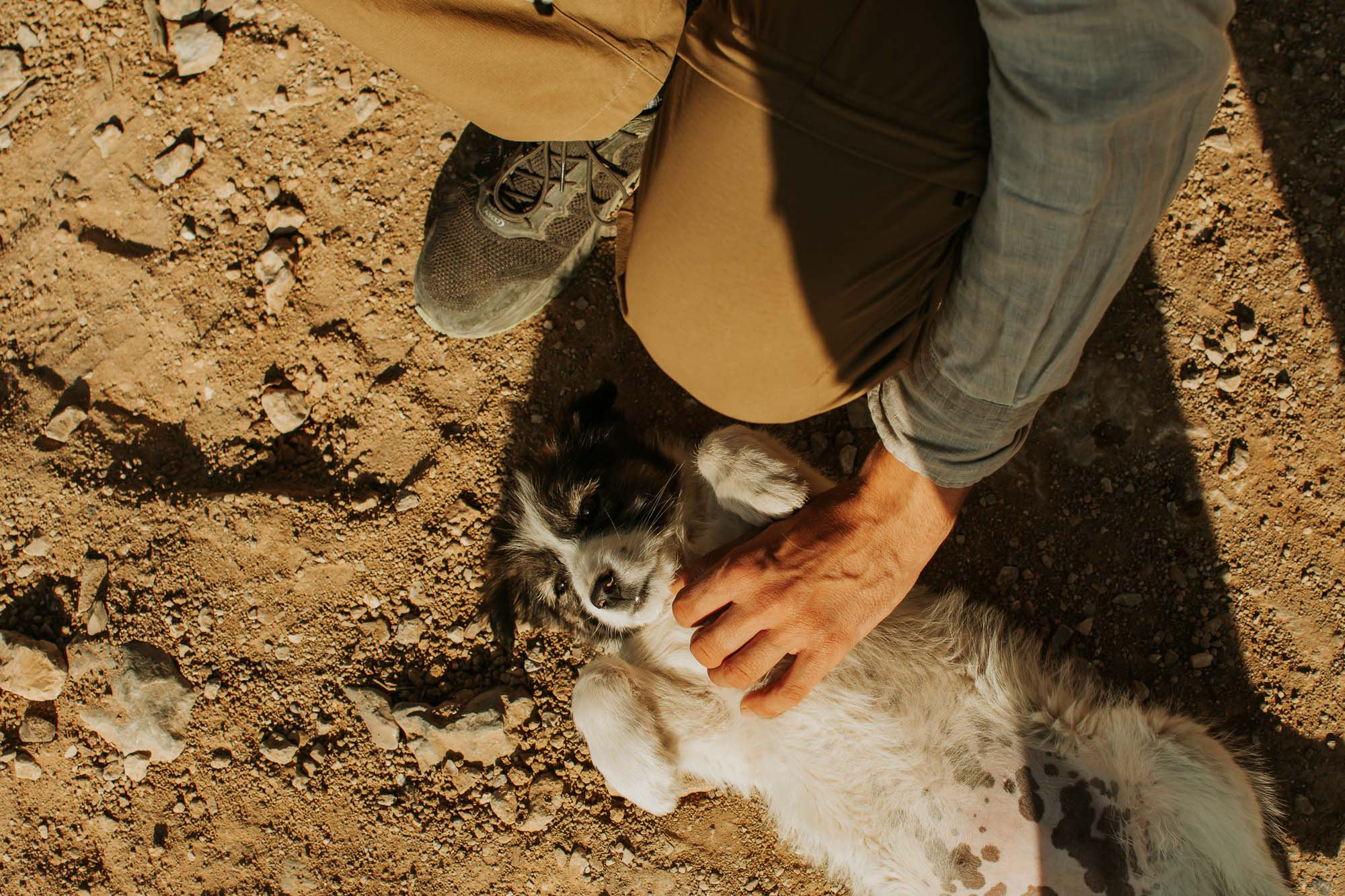
Ferocious beast
Weather
One thing people often overlook is that Jordan, albeit small, enjoys quite a variety of climates. Amman, being at a high altitude, differs greatly from the Dead Sea — the lowest point on Earth. Within just 330 km you can experience freezing (and sometimes snow-covered) Amman and sunny Aqaba with its crowded beaches. This means that in January we ended up using every single piece of clothing we had, while freezing to teeth-clattering levels at night. From the pictures in the article about the “touristy part,” (coming soon) you can guess the temperatures by our clothing — a farwa and a swimming suit were both very much necessary.

Wadi Rum

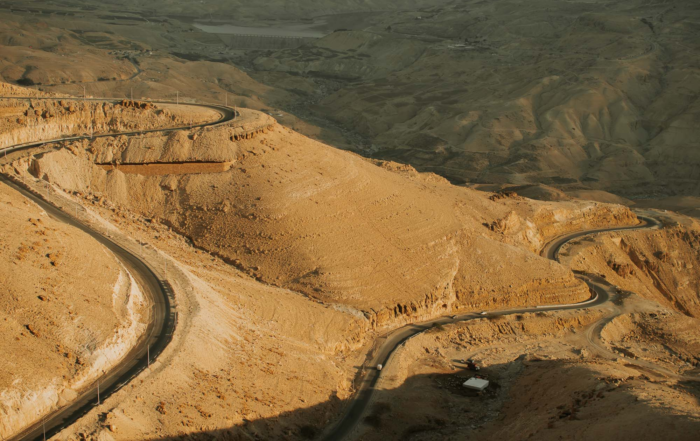
Dead Sea Roads
Accommodation and Camping
One of the most unexpected discoveries of this trip was how few nights we could actually spend in our tent. Out of a month in Jordan, we wild-camped only six (!). Appalling!
The reasons were Jordan’s level of urbanisation, big altitude differences, and very condensed points of interest. Another factor was the timing of our trip — January, which meant quite short daylight hours. By 17:00 we already had to start looking for a camping spot.
This meant that in one day we simply couldn’t cover the curvy distance, visit a castle or an ancient site, then fight the altitude again to leave the urbanised area — all in order to put up a tent before nightfall. Impossible. So much for our wild adventure (largely compensated for in KSA).
On the bright side, we had no trouble booking a hotel, even at the last moment.

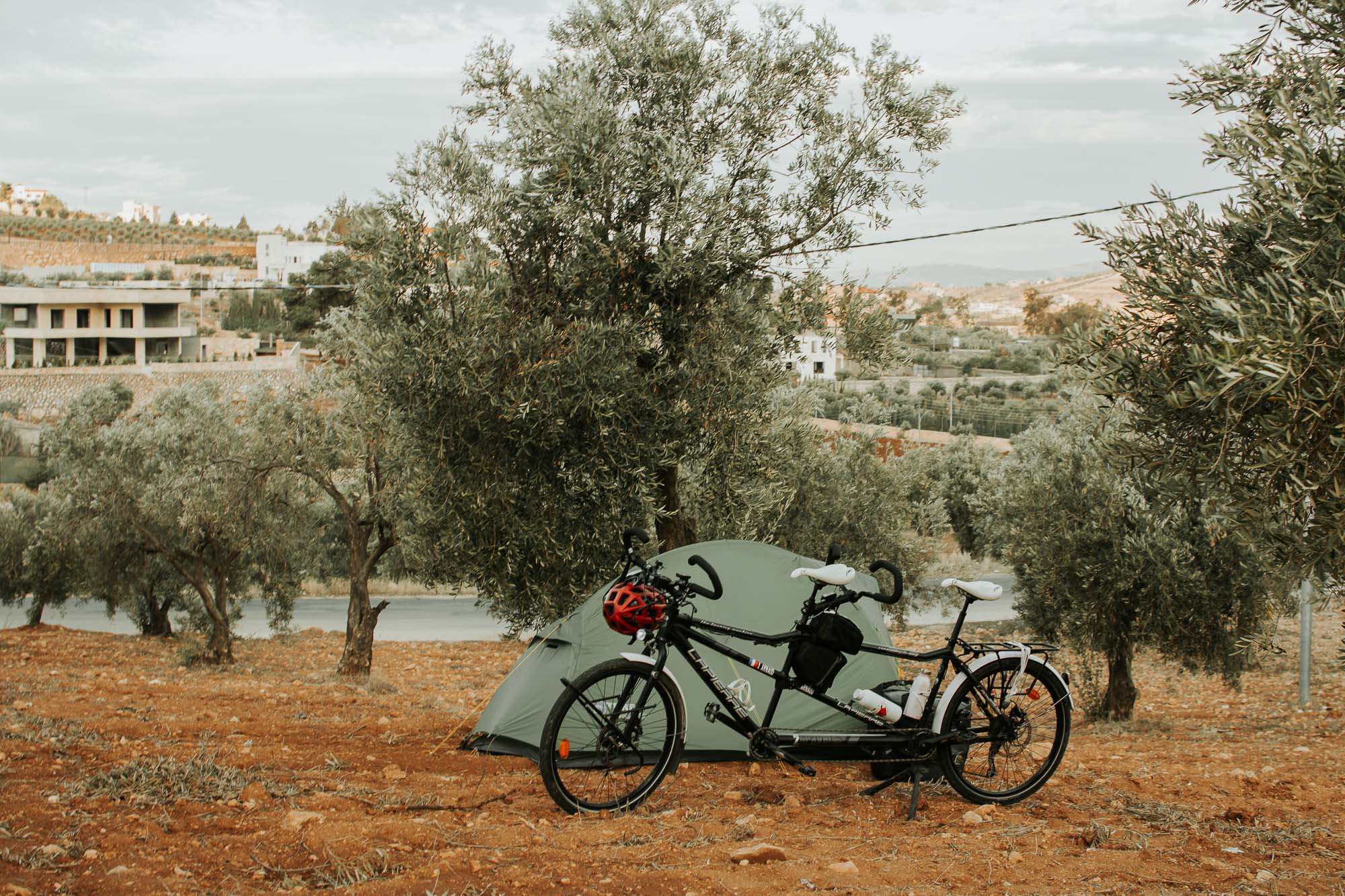
Last and first nights in the tent


Hotel in Aqaba

Feast in Salt
Food and Water
Jordanian food is amazing, really — it’s part of Levantine cuisine, which is to die for. We had some unforgettable gastronomic experiences in Jordan. However, Jordanian cuisine in all its splendour is mainly found in big cities (Amman, Aqaba, etc.). Outside of them, the main “universal” dish — the falafel sandwich — became our staple food. Nutritious and veggie, but after a month I had had enough.
Still, the point is this: finding a shop to stock up on food is not a problem at all, so we didn’t have to carry large food or water supplies.
Medicine and Hygiene
From what I’ve already said about accommodation, you can see that we had regular access to showers and other facilities. Although we carried a hefty bag of pharmacy essentials, we barely used anything. In advance, we updated our tetanus vaccines and also got rabies shots (those were expensive argh!). Luckily, health-wise everything went smoothly.
Naturally, we brought several sticks of SPF 50 sunscreen and used them religiously — we are old and wise enough to be scared of sunburns.

Hilton Hotel Dead Sea
Budget
I always emphasize that we are not tight-budget travellers, and we don’t hesitate to treat ourselves to a nice hotel once in a while, a restaurant, or a paid experience (like a Wadi Rum tour). I can safely say that in Jordan one can subsist on just a few dinars per day (a falafel sandwich costs no more than 1 JD), but the opposite is also very possible — spending more than 30 JD per day in a restaurant is quite easy.
Our total spending for the month in Jordan came to 2.430 EUR. This includes almost the entire month of accommodation including two nights in Hilton on the Dead Sea, four nights in a hotel in Aqaba, the Jordan Pass, two nights in Wadi Rum, diving in Aqaba, and other pricey experiences that one can easily do without.

Interactions With Locals
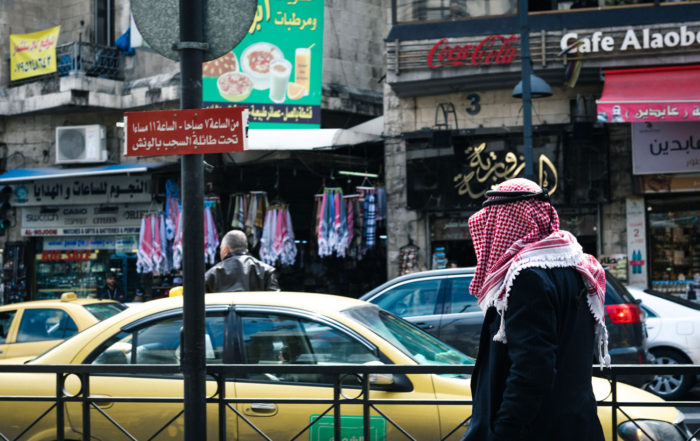
People in Jordan are generally very welcoming and easy-going. “Welcome to Jordan” is the phrase you’ll hear a thousand times per day, and yes, at some point it does get frustrating. Arab hospitality also lived up to its reputation — we were invited to stay for the night, fed, given lifts (yes, with a tandem!), offered help in various forms and shapes, and in general people showed a lot of curiosity about our endeavour.
It seems there is a kind of honor obligation to help when help is needed — and if someone can’t help for some reason, they will do everything they can to find a person who can. Sometimes it was simply astonishing. We didn’t experience any “touristic harassment,” which is often associated with travelling in the Middle East. English, however, is not widely spoken outside the touristy areas (although in touristy areas it’s far from spread either), so we had a very limited number of meaningful connections that went beyond basic pantomime.
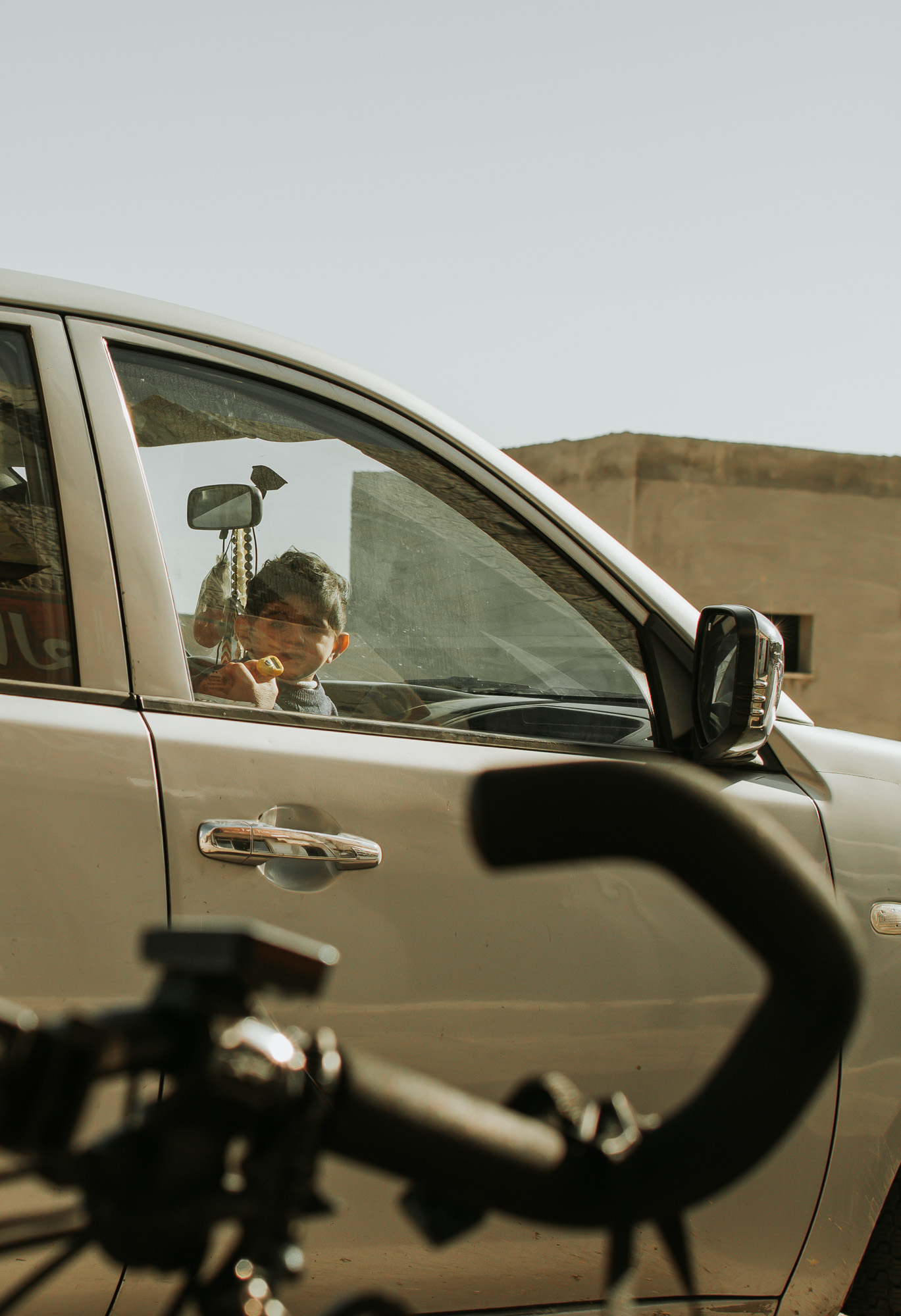
Naturally, there are cultural differences and views that we don’t share and wouldn’t like to confront on a daily basis. The weight and presence of religion (which we would come to miss in Saudi Arabia…), the heavily patriarchal society — our interactions with women were ridiculously scarce, and at some point I felt how much I was missing female presence in the streets (yet again, it only got worse in KSA) — and the complete disrespect for the environment, which twisted our stomachs. Also some nuances of cultural interaction when our “no” was completely and totally disregarded — thus we ended up with heavy and useless gifts, food that we didn’t want and tea pauses that completely ruined our already difficult schedule.
These aspects had quite a negative influence on our trip overall, because one thing is spending a week road-tripping on a touristy itinerary, and a completely different one is being “out there” for a month, crossing the entire country by bicycle (see the section below Cycling in Jordan: Our honest feedback).

Attracted a lot of attention in the Jordan Valley

Got caught for a tea pause

Ready for descent without brakes in Wadi Mujib

On the road to Wadi Rum
Female Cyclist in Jordan
A very short summary would be: dress modestly, and that’s it. There is no legal obligation to wear anything specific, but out of respect for local customs (and not that in January you’d really want to wear a bikini on the streets of Amman), you just cover up — and that goes for men too, by the way. There is also a large Christian community in Jordan, which doesn’t require covering at all, so on paper this question is not really an issue.
However, my experience was much more complicated than that. In the section above, I mentioned missing seeing women in the streets — and over the month it became a serious mental pressure. It was always Xavier who was addressed in any interaction, and I was a bystander. Yes, I know how this is explained in Middle Eastern culture: by not interacting with women, men show them respect. Sure. But as in my culture respect is shown by acknowledging women’s agency, I had a hard time staying invisible.
Being invited into people’s homes, being fed and entertained was wonderful, but there was a very clear task separation: men entertain, women cook and serve. And on multiple occasions, people expressed “deep concern” about us not having children. This concern went as far as suggesting contact details for a doctor who might be able “to fix me.” It was much harder to bear than asking myself whether I needed to cover my head.
Technical Points and Equipment
Honestly, writing a full list of precise equipment would take ages — and besides, times have changed, I’ve grown bitter of brands, and I have no intention of listing them for free. 🤪
However, if you feel you need specifics, feel free to contact us via comments, email, or Instagram with your questions.
In broad strokes, here are the things that turned out to be extremely useful:
Sleeping equipment:
- Tent + footprint for rough surfaces
- Foil mats + inflatable mattress + inflatable pillows
- Two warm sleeping bags (we’ve been using them since our trip to Finland in 2015!) and silk liners
For each category, we had spare fabric and a repair kit, just in case.

Tent night in Wadi Mujib
Electronics:
One big (10k mAh), and two small power banks (3.5k mAh), two small bike flash-lights, no laptop but an iPad. Our usual Nikon D500 camera with a small lens — carrying our usual 24–70 mm was out of question. Phones and ear buds — it goes without saying but I used the ear buds as the way to protect my ears from the traffic noise, which was quite violent.
Cooking equipment:
A basic cooking set, which we didn’t use much for the reasons described above. We still got our gas stove in the only place in Jordan where it can be bought — the TREKS ️Outdoor Sports shop.
A particularly good purchase for this trip was a silicone soft flask, which turned out to be extremely useful in KSA.

Cycling equipment and spare parts:
Basic spare parts, four inner tubes, one spare tire (not enough), four spare brake pads, spare spikes, various screws, and tools. A very useful thing that supported us a lot (esp. in KSA where our daily distances were longer and access to civilization more limited) — a dynamo hub that generated electricity enough to support the charge on my phone during the day.
NOTE: We were really on the edge with our tandem by the end of the trip, but for the Jordan part there was one major issue: BRAKE PADS. I’ve complained enough about Jordanian altitudes, but apart from being physically challenging, they were also absolute killers for our brake pads. Brake pads that are supposed to slow down a tandem with a total weight of 200 kg on 20% slopes…
We went through every single pair of brake pads in under 300 km, burned the braking disc, and had to order new ones from France. Luckily, people in Jordan were extremely eager to help and quickly found someone who agreed to receive the Chronopost parcel for us. It was waiting for us a bit further along the route, so we could crawl forward at our own pace.

On the road to Dana
Fun Fact:
Once the “cold” part of Jordan was over and it became clear we wouldn’t need warm clothes anymore, we sent a package back to France. Four kilos less is a precious gift for a long-distance cyclist! They also included decorative mosaics from Madaba and several sketchbooks we clearly weren’t going to fill.

On the road to Wadi Rum
Cycling in Jordan: Our Honest Feedback
We cycled 735 km over the whole month of January, which doesn’t sound like a lot. And it really isn’t. However, Jordan turned out to be a difficult country for cycling — and especially for tandem cycling.
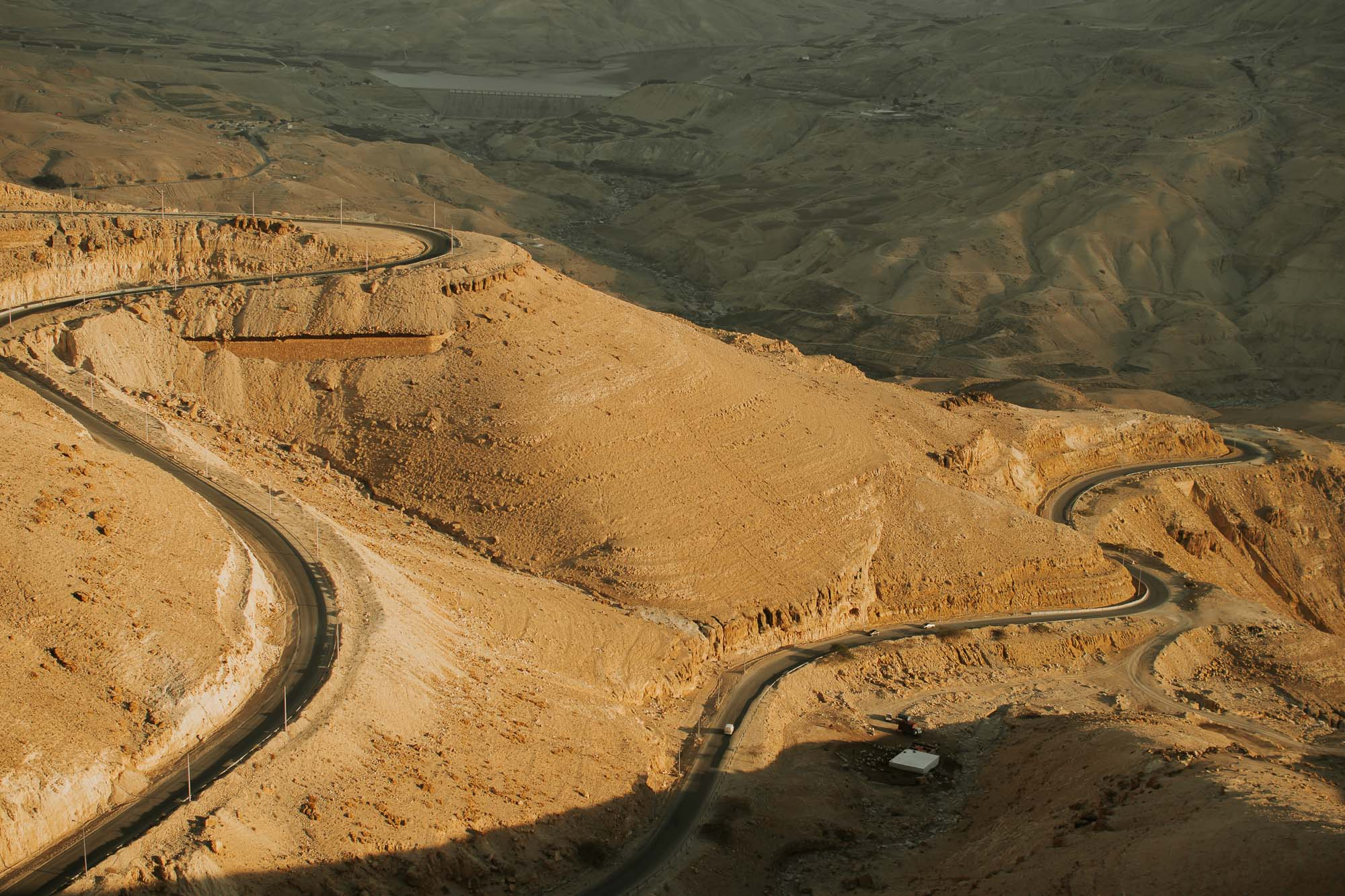
Even though we love our tandem dearly, it does have its drawbacks, and Jordan’s terrain presents many conditions where a tandem is simply not the best machine. I am, of course, talking about altitude. Jordan, especially in the north, has crazy elevation profiles that were physically very challenging, and the tandem’s weight didn’t exactly help. Roads are also very steep, with frequent 12–20% gradients — unlike in France or Saudi Arabia, where roads tend to serpentine to reduce steepness. Here, they just go straight up — and straight down with the same 12–20% descent. Which means that even taking advantage of the downhill sections was impossible.
That’s the first thing.
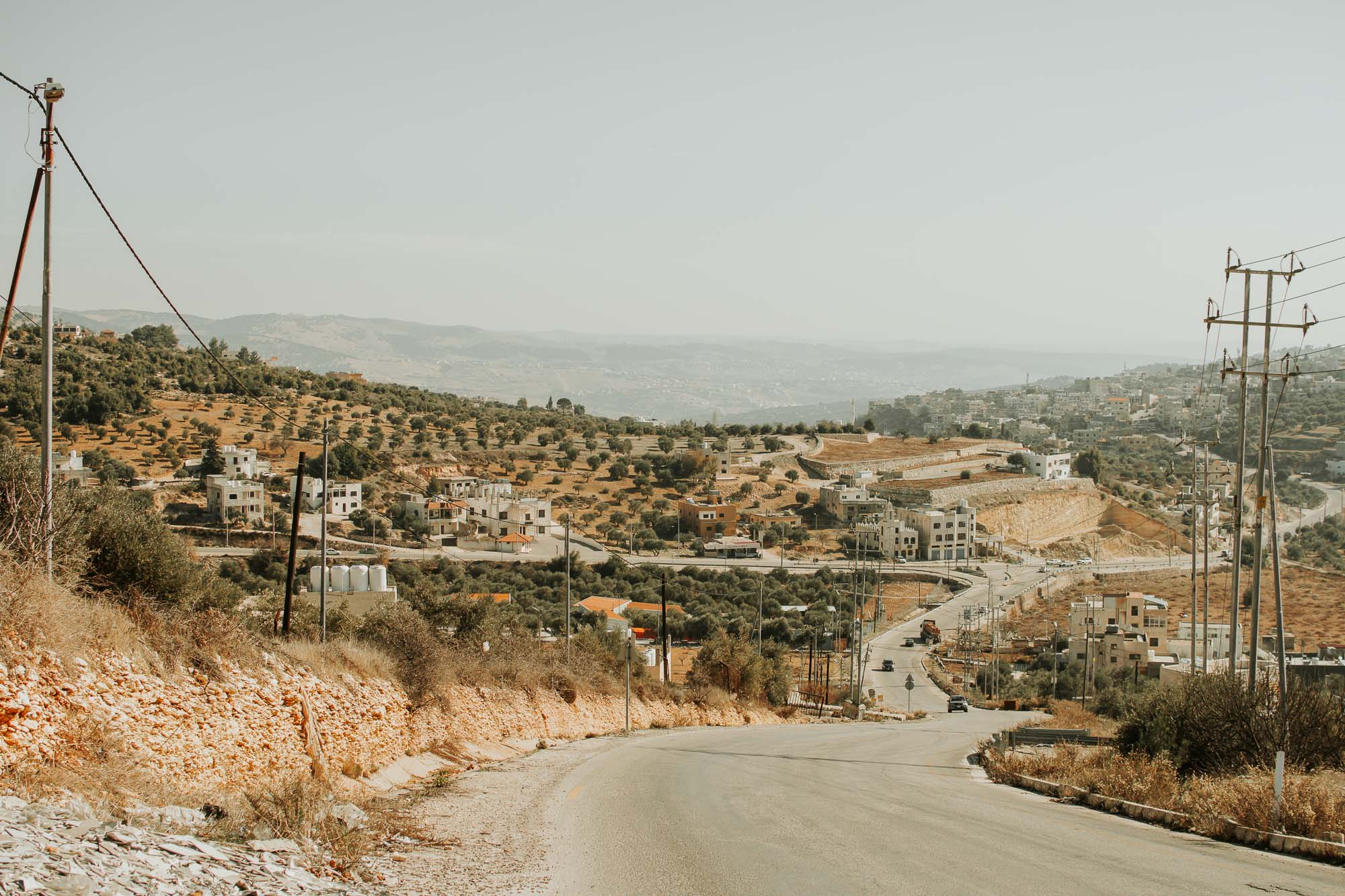
20% slope in Souf, recto-verso
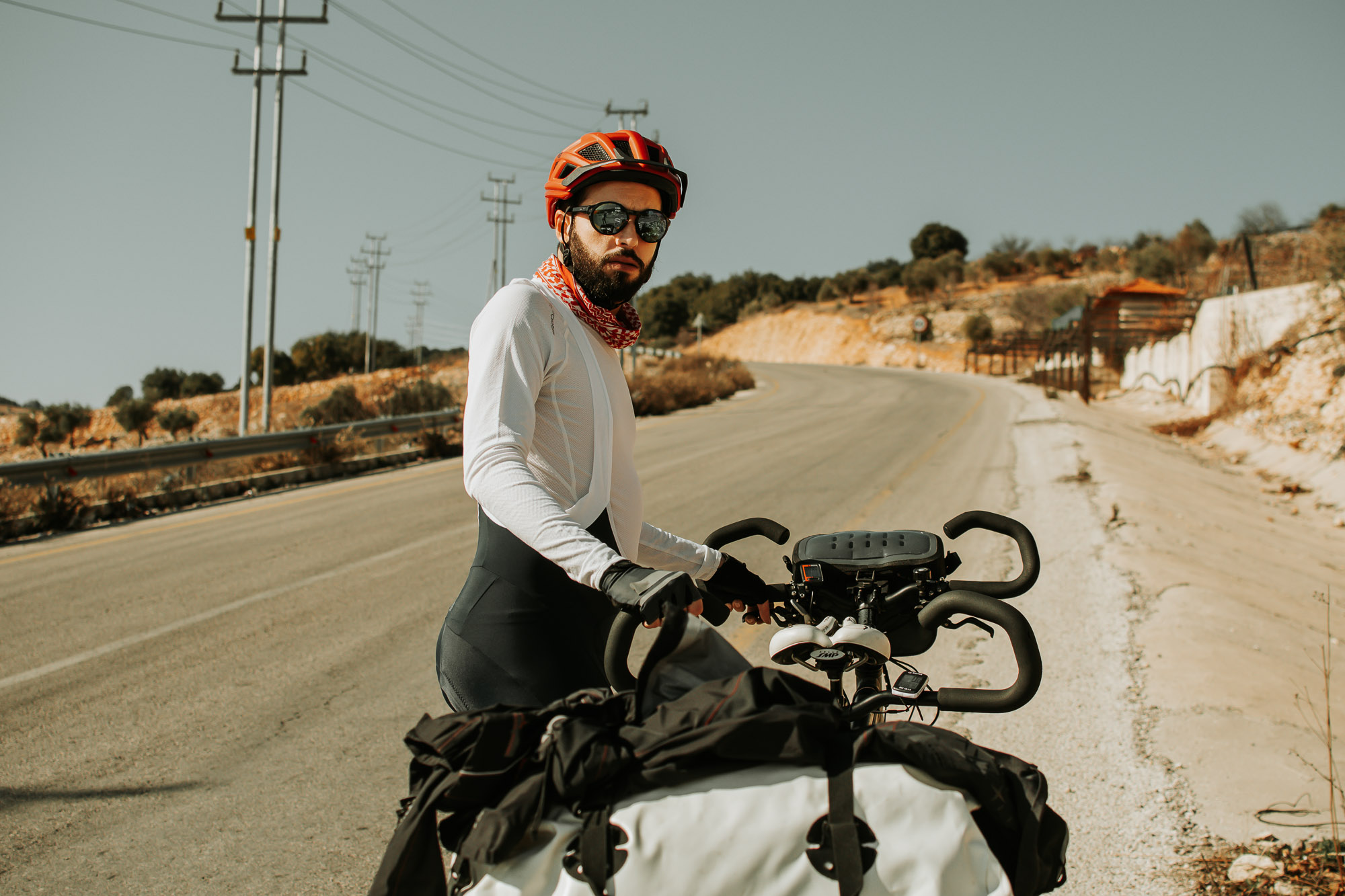
Getting a lift by a truck with chips


Pushing bike, again…

and again…

The second thing is traffic. Although we’ve seen much worse, Jordanian drivers are not particularly careful. Moreover, their friendliness found an unexpected way to backfire: as part of driving culture, people honk for every possible reason. During a single day, we could hear hundreds of honks, simply as a way of saying “Hello and welcome to Jordan.”
How can that be bad, you might ask? Anyone who has ever been honked at outside a car knows that the sound is much louder than from inside — it’s deafening and frightening, especially when you’re cycling on a busy road. Multiply that by hundreds — voilà.
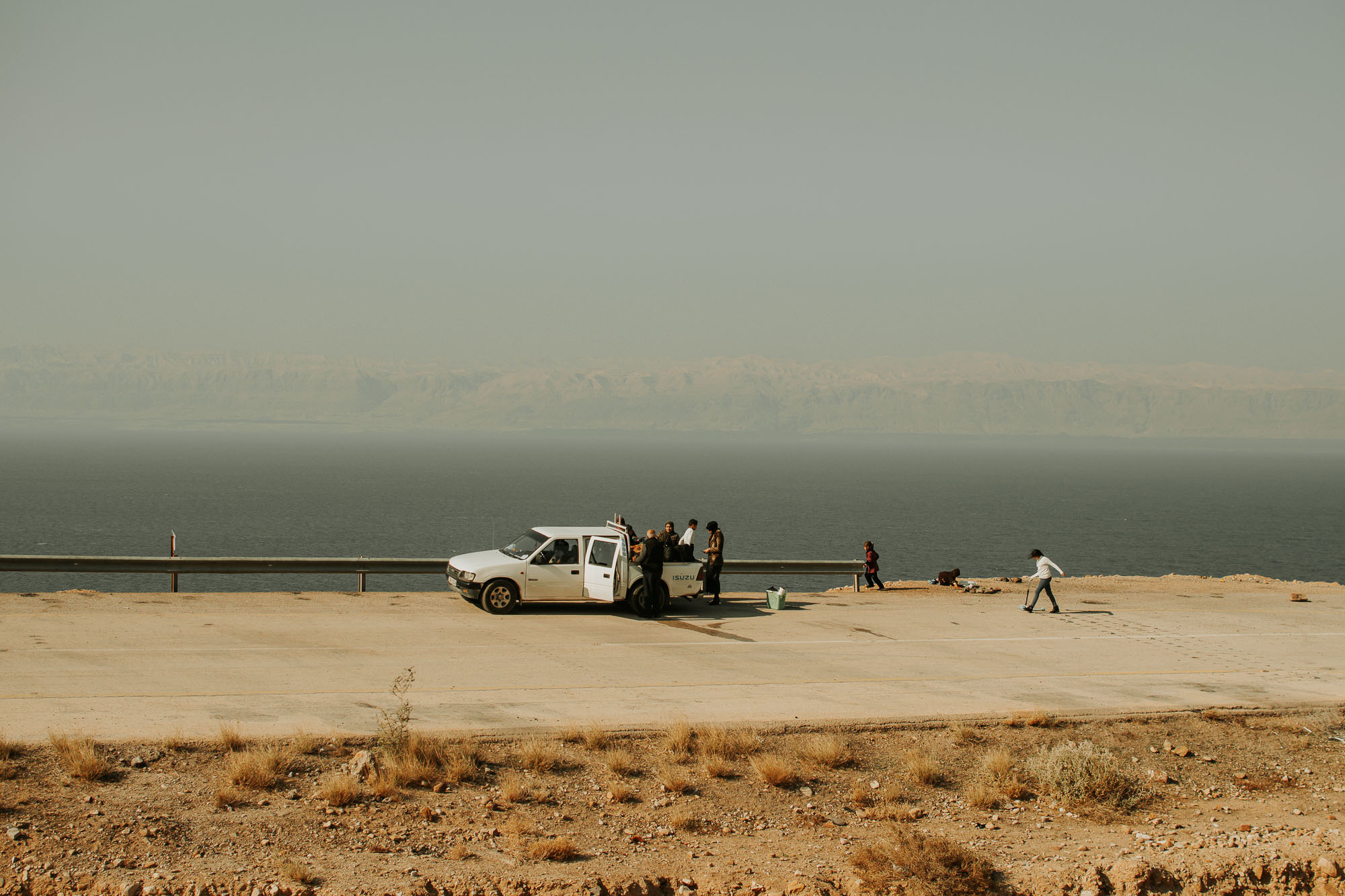
Family picnic on the Dead Sea
Another, much less obvious factor is trash. Yes, it’s me again complaining about litter, garbage, waste, and all that — but it genuinely affects one’s feelings and overall impression. Especially when cycling, with such close exposure to roadsides. Or when trying to pitch a tent and first having to remove litter to clear a small square of ground. Or when, before entering the sea, you have to cross a barrier of cigarette butts (including in the water).
Beach in Aqaba

This is not just a question of aesthetics or existential despair in front of our modern capitalist world made of plastic — there is also a very practical side: for cycling, it simply sucks. It gets into the wheels, it smells (dead animals on the roadside smell horribly!). Once, while cycling near a dead donkey, a passer-by cheerfully pantomimed how the donkey had eaten plastic, which wrapped around its intestines and caused its death. Add to this the countless bottles filled with urine on the roadside (I know this because it’s a worldwide practice among lorry drivers), and you get the full picture.


BISKELET!! — kids were ecstatic to see such a machine

Wadi Rum

If we combine all of this — difficult altitudes, high urbanisation, the smell of gasoline and decay, constant honking, regular document checks (with very detailed questioning about who we were and what our itinerary was) — cycling in Jordan is… not great.
Things are very different in KSA, but we’ll get to that in a dedicated article.
It’s very important to emphasize, though, that Jordan is an incredibly beautiful and diverse country, with kick-ass cuisine, rich history and culture, an amazing architectural legacy, and friendly, welcoming people. However, it is definitely not the best country for cycle touring. Jordan disappointed us as a cycling destination, not as a country.
In the next articles, I’ll talk more about the places we visited. As for general cycling feedback — that’s it. And once again, feel free to contact us if you have any questions at all, or if you have your own experience to share — we’ll be glad to read you.
Feel free to contact us or leave a comment — we would love to read about your experience or thoughts!
Last but not the least…
Huge, endless THANK YOU to everyone who made this trip unforgettable, shared their stories, hosted and fed us, and turned the skies upside down to help us when we were in need: Anastasia, Alaa and his family, Sleeman with Nour and Sanah, Abu Ahmed, Noar, and so many more whose names I misheard or didn’t catch and was too embarrassed to admit it. And so many others with whom the contact was too brief to even exchange names.
Leave A Comment